
Blind Cups, Bright Conversations: Our First CoffeeHunt Cupping Event
What a blind, multi-roaster cupping in Atlanta revealed about curiosity, flavor, and connection.

Last weekend we hosted our first CoffeeHunt cupping in Atlanta, starting at 4:30 PM.
That timing stood out to me before the event even began. Most cuppings I’ve been to happen early in the morning, usually somewhere around 9 or 10 AM, when the format feels a little more work-like and tightly focused. This one felt different from the start. By late afternoon, people seemed more relaxed, more conversational, and more open to lingering a little longer over each cup.
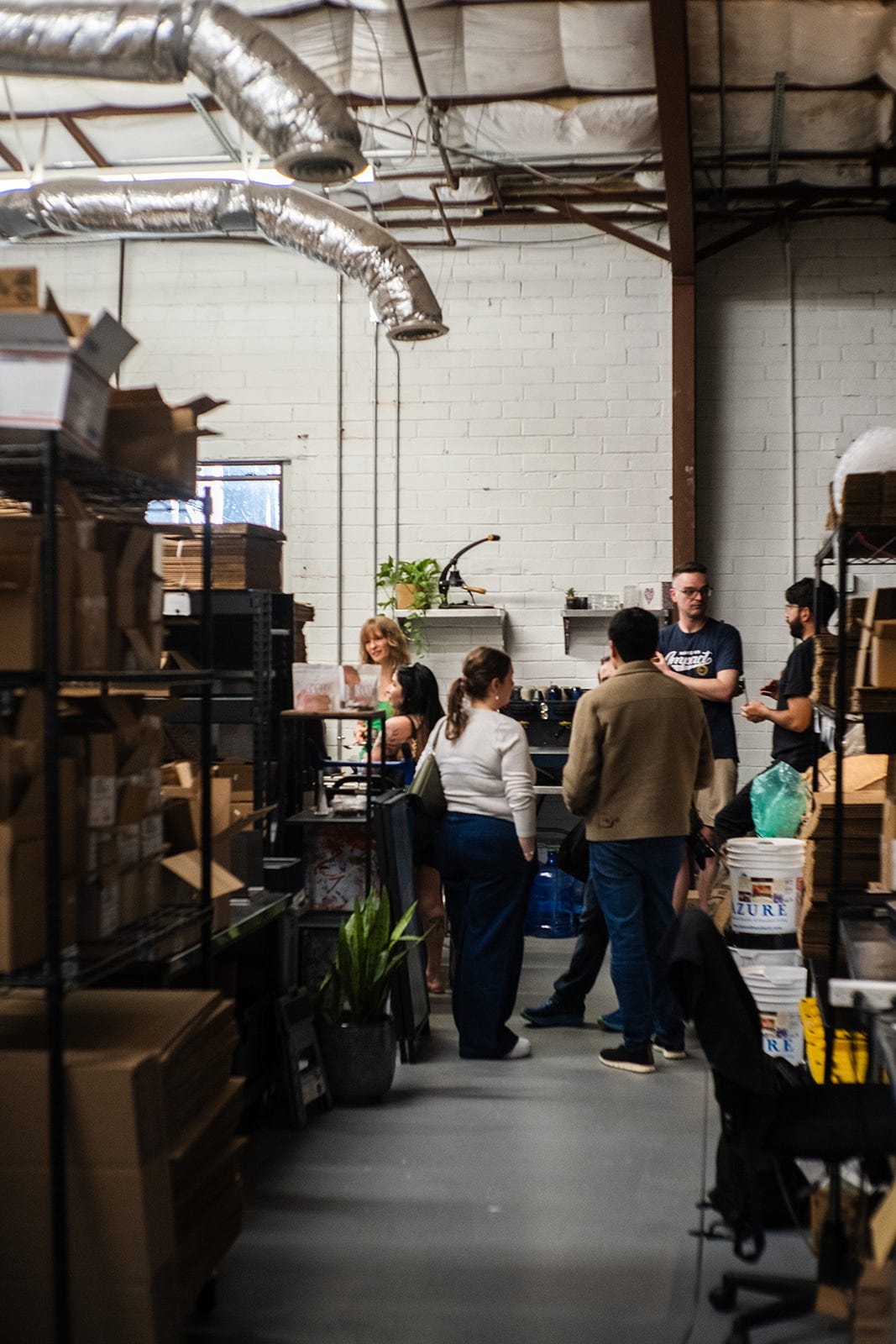
Maybe it was because most people had already eaten and taken care of their day. Maybe it was because industry people could actually join once their café shifts or shop responsibilities were winding down. Either way, the afternoon slot changed the mood in a way I really appreciated.
We almost questioned whether 4:30 PM might be too late in the day for that much caffeine. But it turned out to be an advantage because it filled the room with a mix of coffee professionals, home brewers, and people who were simply curious enough to show up and see what coffee tasting could feel like in a more open setting.
A public cupping, slowed down a little
Most cuppings are practical. Roasters use them to evaluate green coffee, compare lots, and make sourcing decisions. They’re often held in-house, usually earlier in the day, and are designed more for calibration than conversation.
This one had a different rhythm.
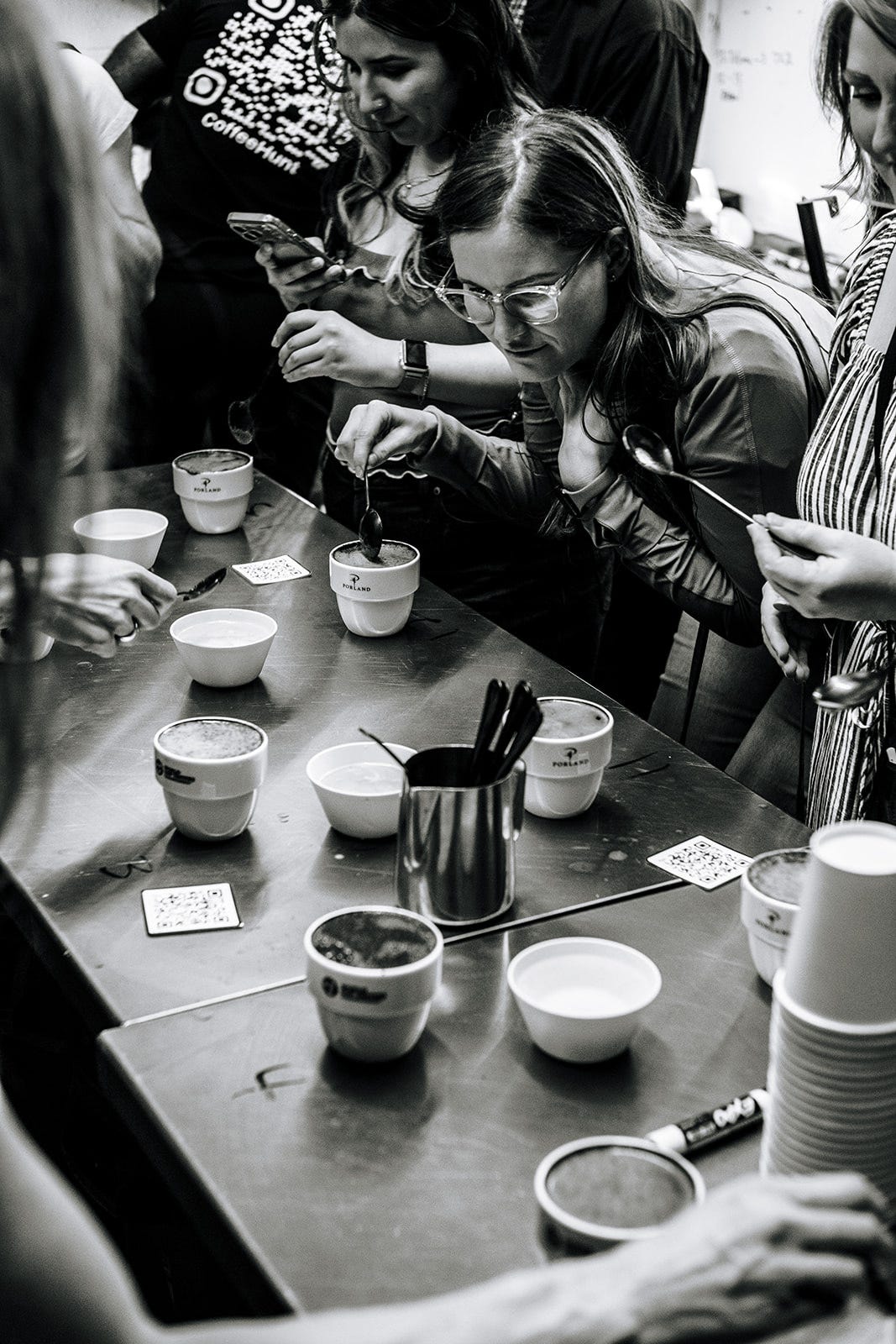
What I’ve always appreciated about Flow Coffee is that they’ve helped make cupping more public-facing and approachable. That spirit was part of what shaped this event, but we also wanted to push toward something a little less common in Atlanta: a blind, multi-roaster cupping that wasn’t centered on one company or one coffee perspective.
The goal was simple. Strip away the labels and let people respond honestly to what was in the cup.
A table without labels
Before anyone tasted anything, the coffees were ground and set around the table, each one marked only by an identifiable number.
No tasting notes. No origin cards. No roaster names. No clues.
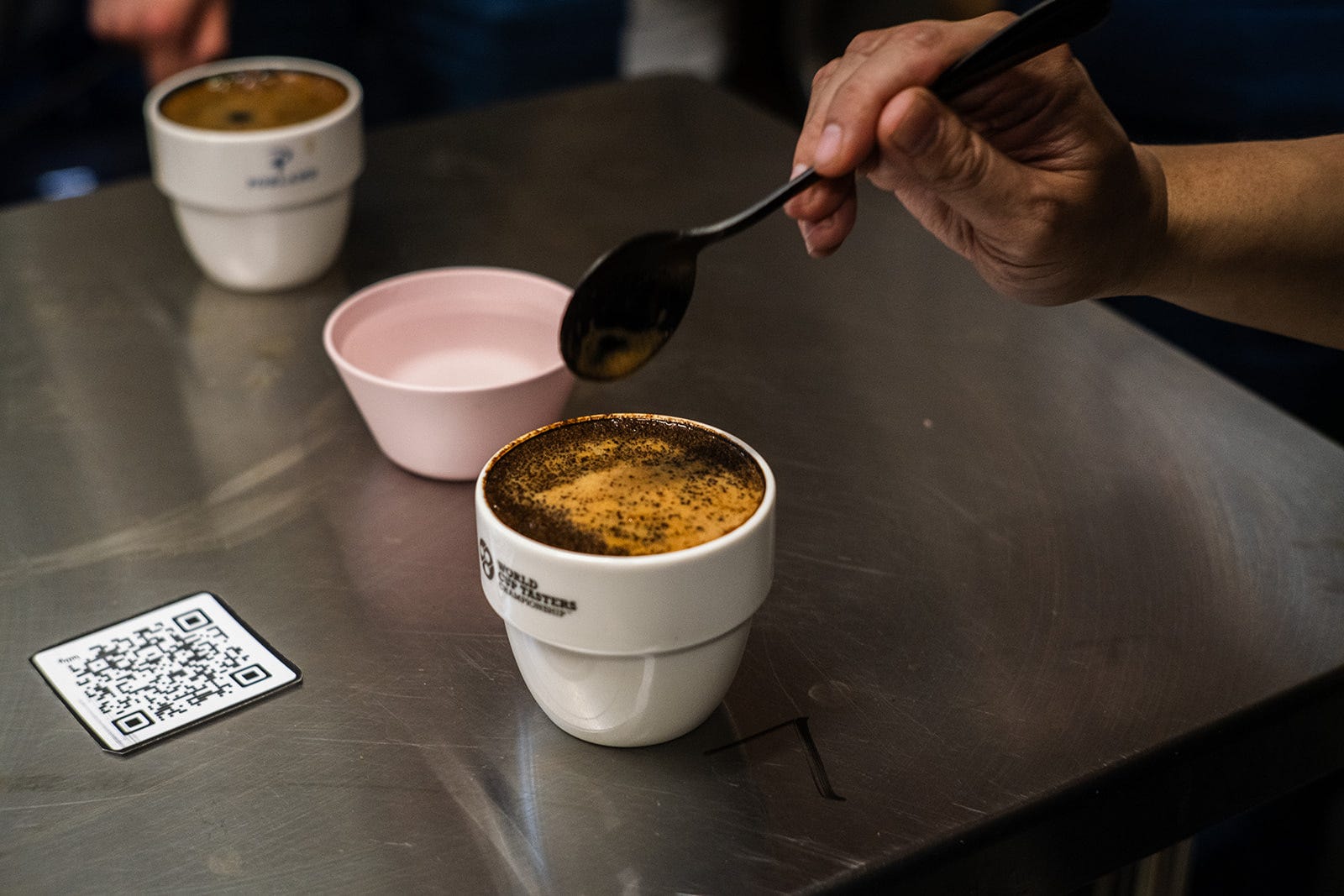
That part was intentional. We wanted people to meet each coffee where it was, without trying to reverse-engineer what they thought they should be tasting. No one could rely on branding or familiarity. The coffees had to stand on their own.
Some coffees deserve to be tasted before they’re explained.
The process itself also slowed people down in a way I liked.
We started by moving around the table almost like musical chairs, circling from cup to cup and smelling each one dry before any water was added. Just aroma, first impressions, and a little anticipation building as everyone tried to understand what might be coming next.
Then the cups were filled with hot water to the brim and left to steep.
After that, the crust was separated, and guests were invited into the tasting itself. Everyone was given a small mug and a spoon. Instead of drinking directly from the cupping bowls, they scooped a small amount of coffee from each numbered cup into their own mug and tasted from there. A washing bowl was placed nearby so spoons could be cleared between cups before moving on to the next one.
It felt simple, intentional, and easy to follow.
More importantly, it made the format approachable for people who had never done this before.
A room full of different kinds of curiosity
One of the best parts of the event had less to do with technical coffee knowledge and more to do with the mix of people who showed up.
Some attendees knew what every varietal was and already had strong preferences. Some were newer to specialty coffee and were still figuring out how to describe what they were tasting.
That range made the room more interesting.
No one needed to be an expert to participate. And being an expert didn’t make the experience any less surprising.
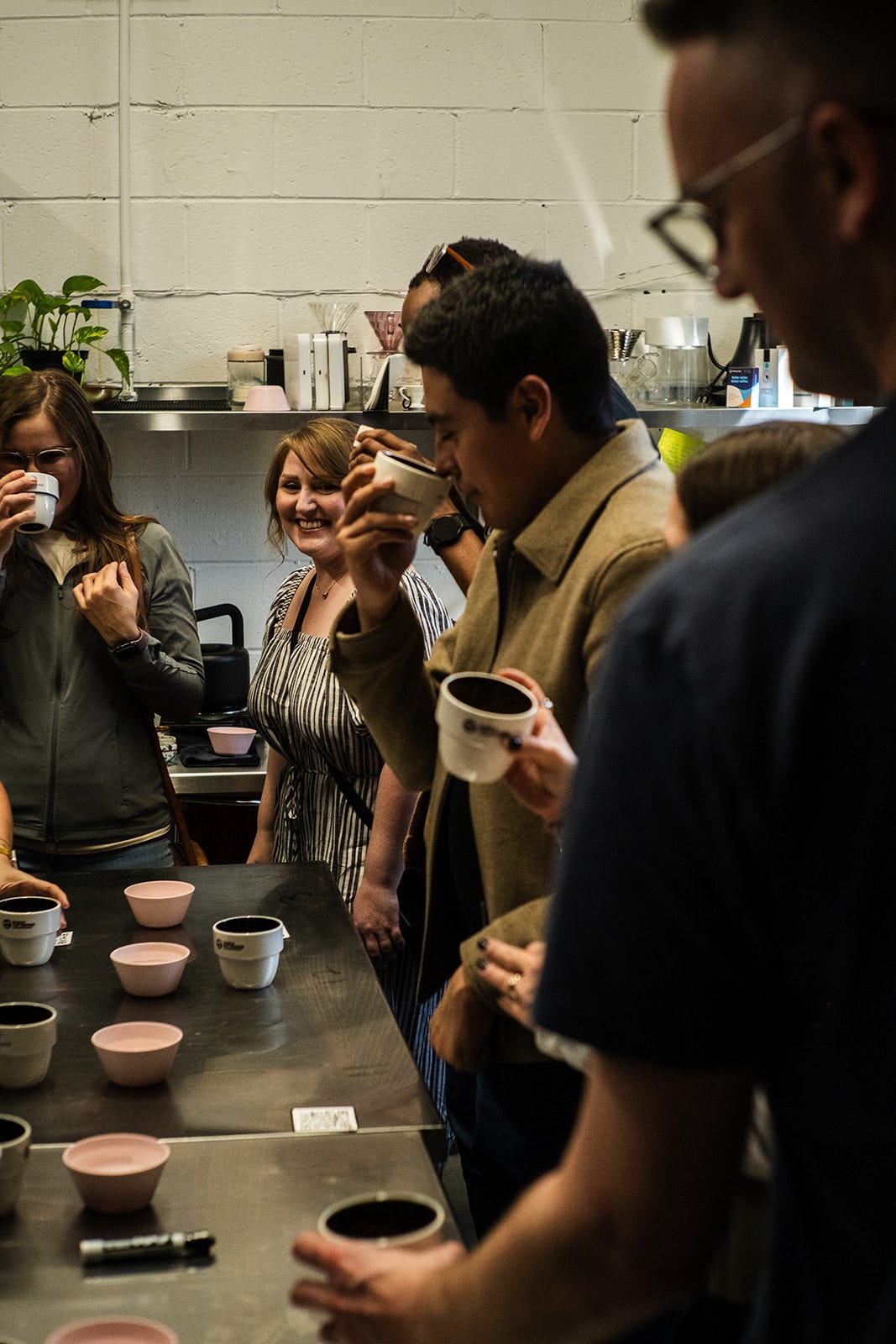
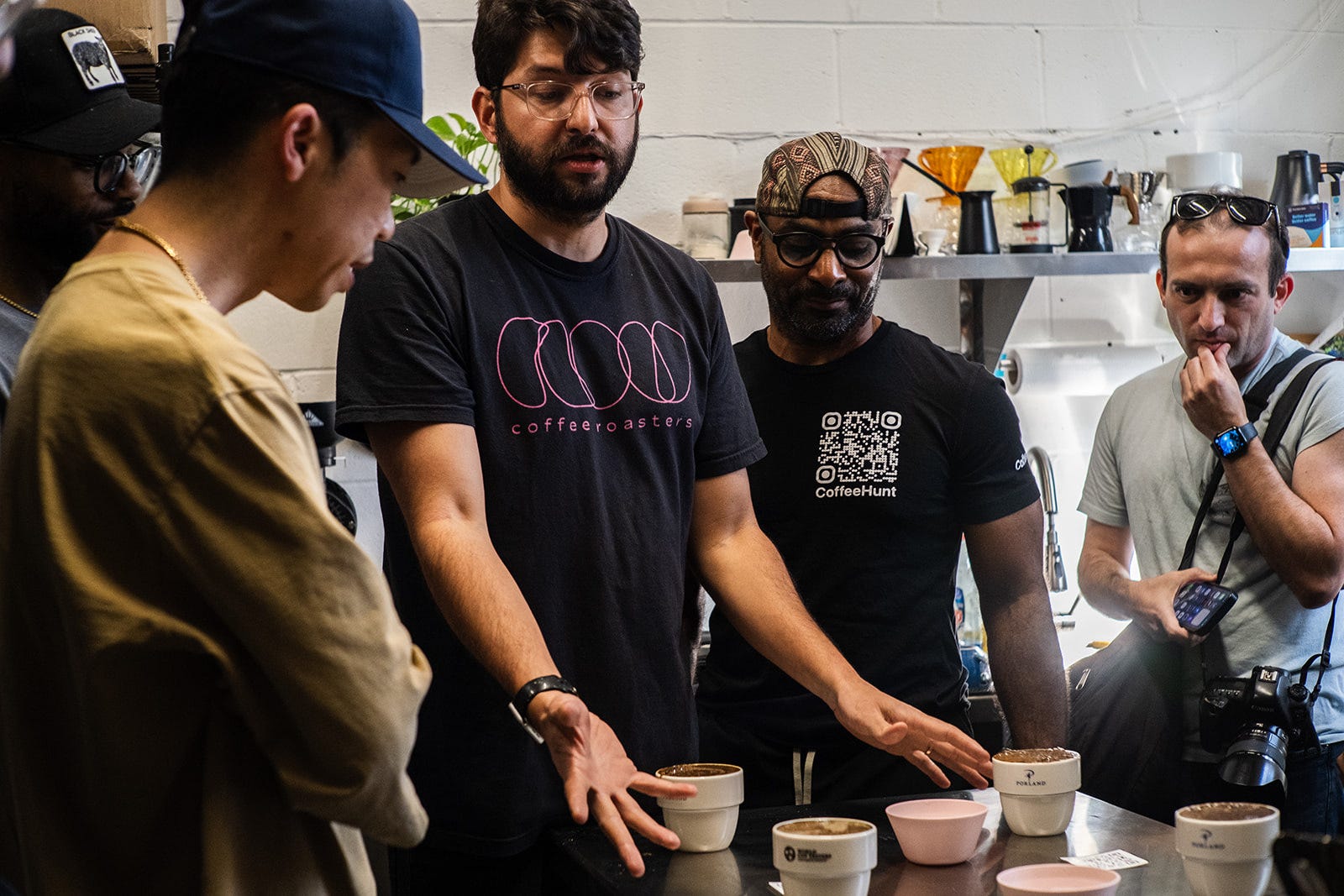
Cuppings don’t really demand expertise. They just ask for attention.
The atmosphere also felt unusually social for a cupping. People introduced themselves quickly, compared notes easily, and started talking across different levels of coffee knowledge without much hesitation. More than once I had to pull the room’s attention back because people were genuinely enjoying themselves and getting lost in conversation.
That felt like a good sign.
Not just because the event was lively, but because it suggested that people want coffee experiences that feel open and social, not only technical.
Thirteen coffees, one blind tasting
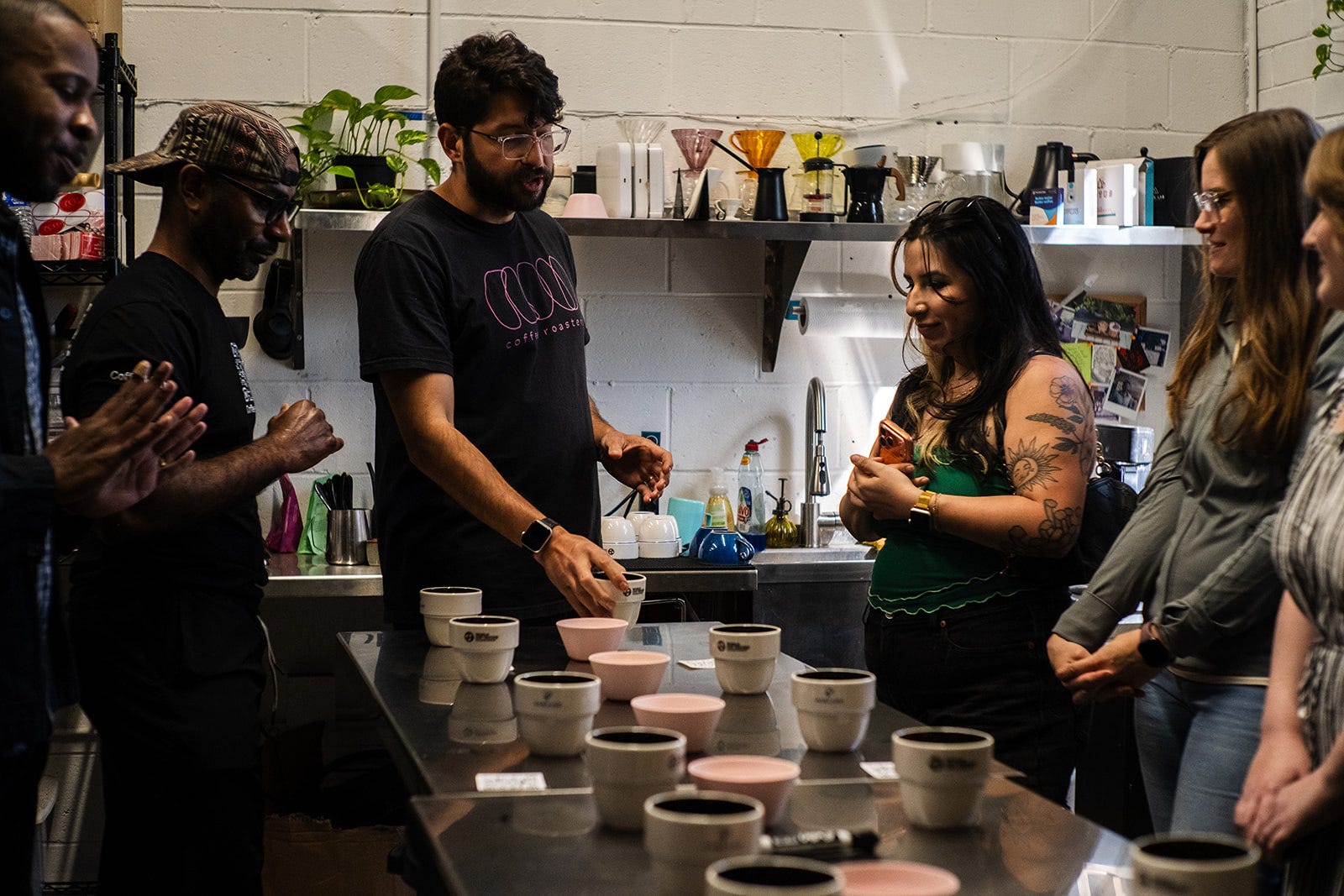
We tasted thirteen coffees from a range of roasters. See them all here.
Looking across the table, one thing became obvious pretty quickly. We had several coffees from Colombia, and while that gave us a chance to taste a lot of range within one producing country, it also made me wish we had pushed for even more variety across origins.
That’s probably the biggest thing we’ll change for the next one.
The lineup still showed a lot of diversity in flavor, but a broader spread of countries would have made the comparisons even more useful, especially for newer tasters trying to understand how origin can shape the cup.
The louder coffees stood out
Even with that concentration, the response pattern in the room was telling.
The anaerobic and co-fermented coffees stood out much more noticeably than many of the washed and more classic natural offerings. Again and again, people leaned toward the most vibrant, most expressive, and least traditional cups on the table. The coffees that felt furthest from a familiar idea of coffee often created the strongest reactions.
That doesn’t mean everyone agreed on the same favorite.
But it did suggest something worth paying attention to.
When people taste blindly, curiosity often pulls them toward the coffees that feel the most unusual.
In this case, the louder cups had an advantage. The more fermented, fruit-forward, and unconventional profiles were often the ones people remembered most clearly. That may say something about where coffee is moving, or at least what curious drinkers are looking for right now. People are not only looking for quality. They’re also looking for distinction and something unique.
Rating the coffees
One of my favorite parts of the format was keeping all tasting notes hidden until the very end.
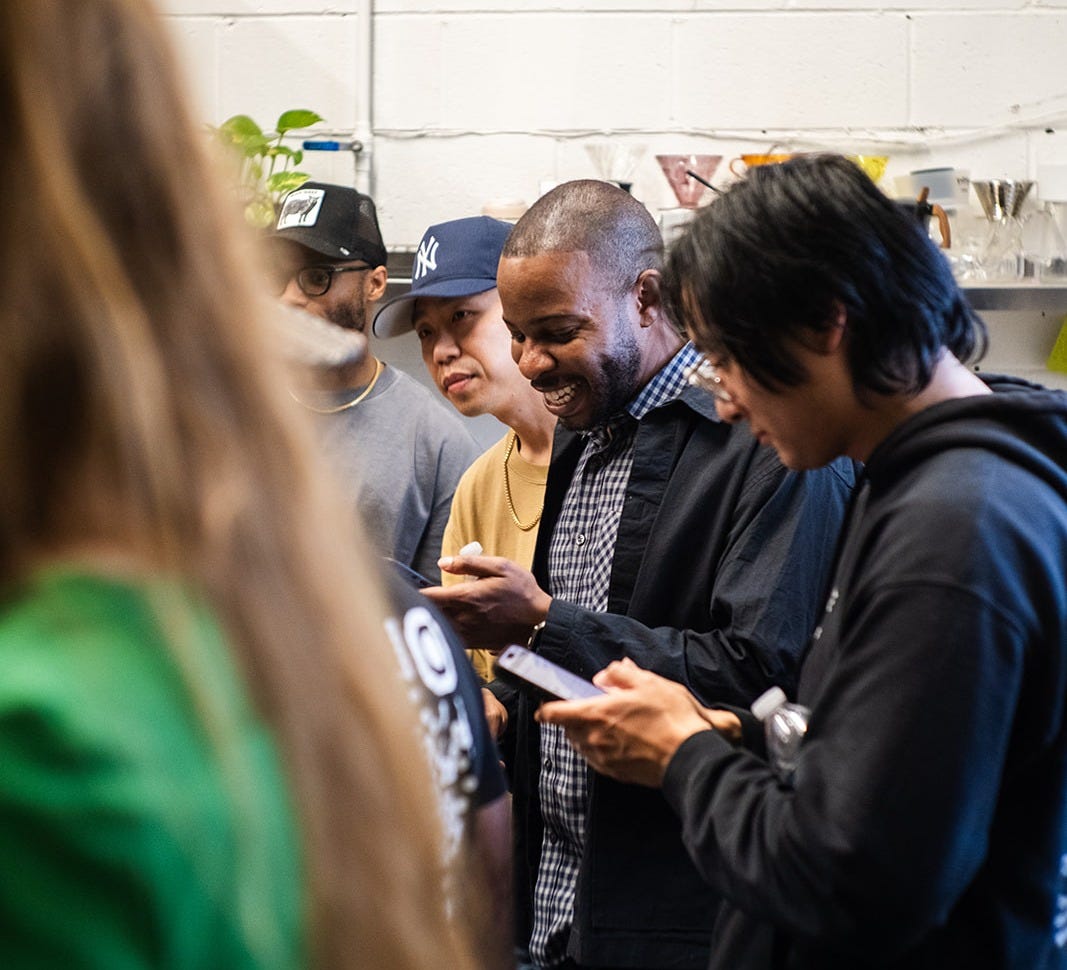
Participants scanned a CoffeeHunt QR code that took them to a page where they could rate each coffee and leave comments describing what they were experiencing. Only after submitting their responses were they led to a results page and see the full coffee details, along with what people had upvoted and commented on.
That gave the event a second layer.
First, you had the tasting itself. Then you had the reveal, where people could see what they had actually chosen without any context guiding them beforehand.
Sometimes what you choose blindly is very different from what you think you’d choose on paper.
There’s something useful in that. Not only for coffee drinkers, but for roasters, cafés, and anyone trying to understand how people genuinely connect with flavor.
More than a first event
Another detail I appreciated was that even one of the featured roasters participated in the blind tasting, despite having one of their own coffees on the table up for review alongside what could be consider competitors. This is very uncommon, but it showed that coffee roasting isn’t about competition but connection and understanding.
Unfortunately we didn’t get to try every Atlanta roaster or every coffee we had available we would have loved to include, but it set the stage for future events we will run.
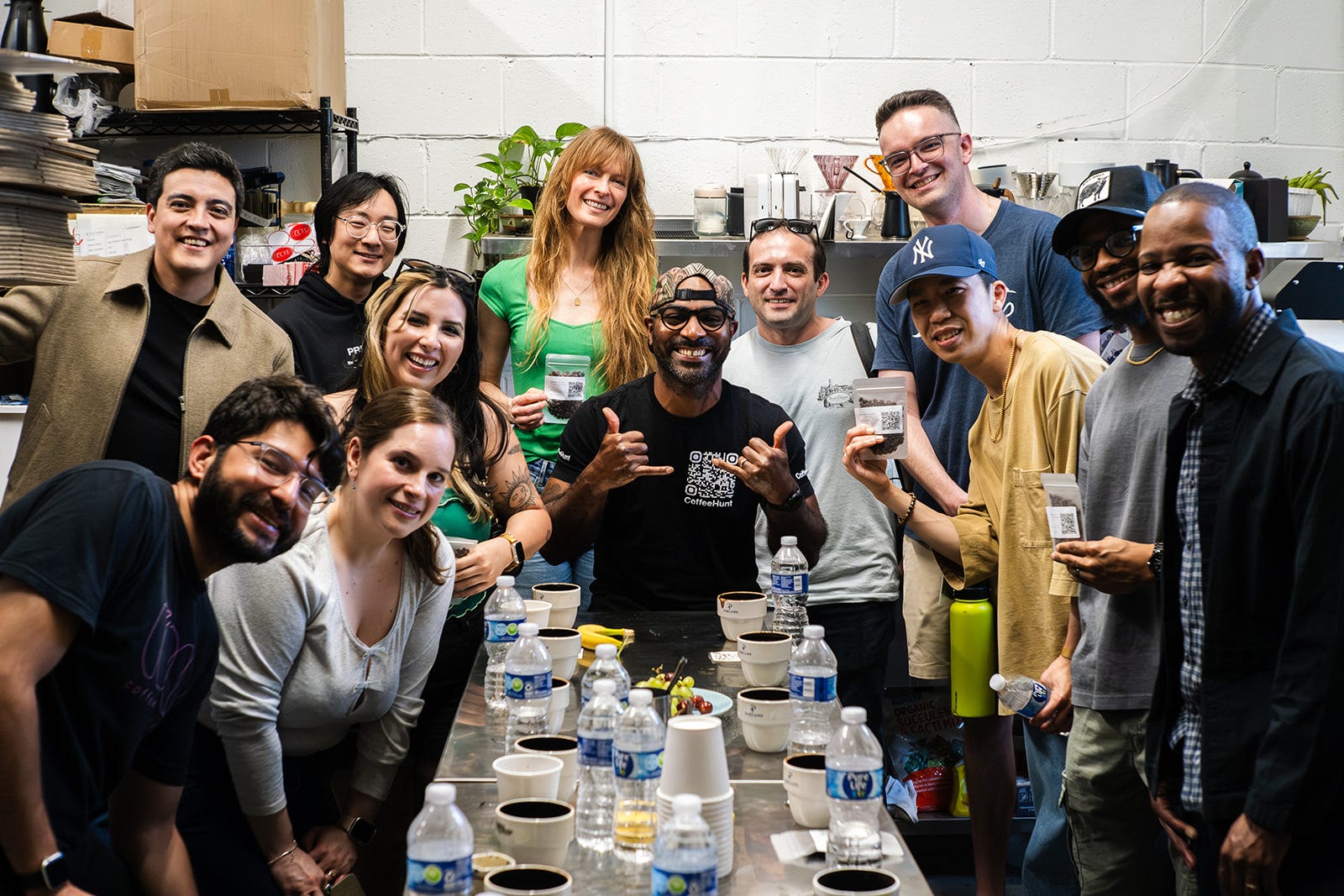
This cupping showed that there’s real interest in this kind of event in Atlanta. It showed that people are willing to engage more deeply with coffee when the space feels welcoming. It showed that blind tasting can surface honest preferences in a way branded tasting often can’t. And it gave us a clearer sense of what people are actually drawn to, not just the unique coffees, but to each other.